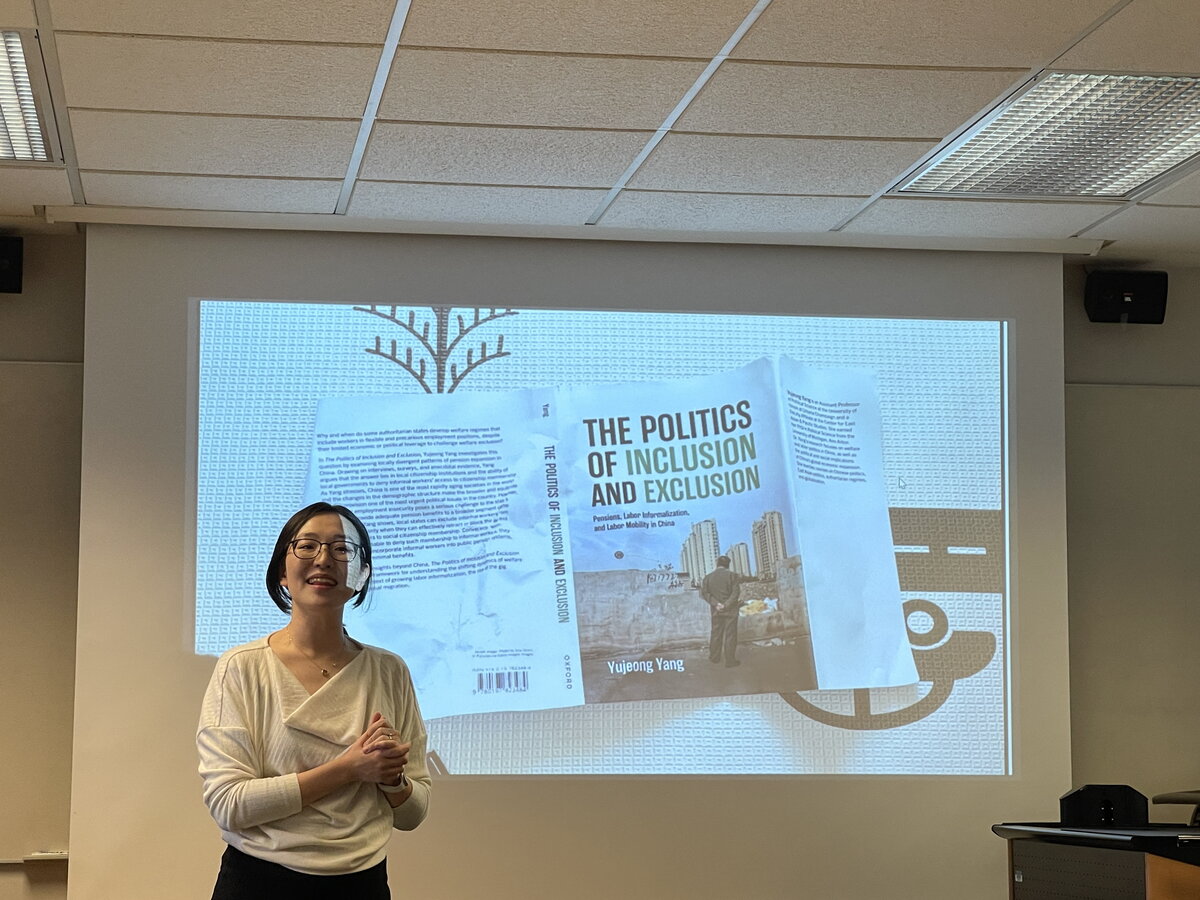
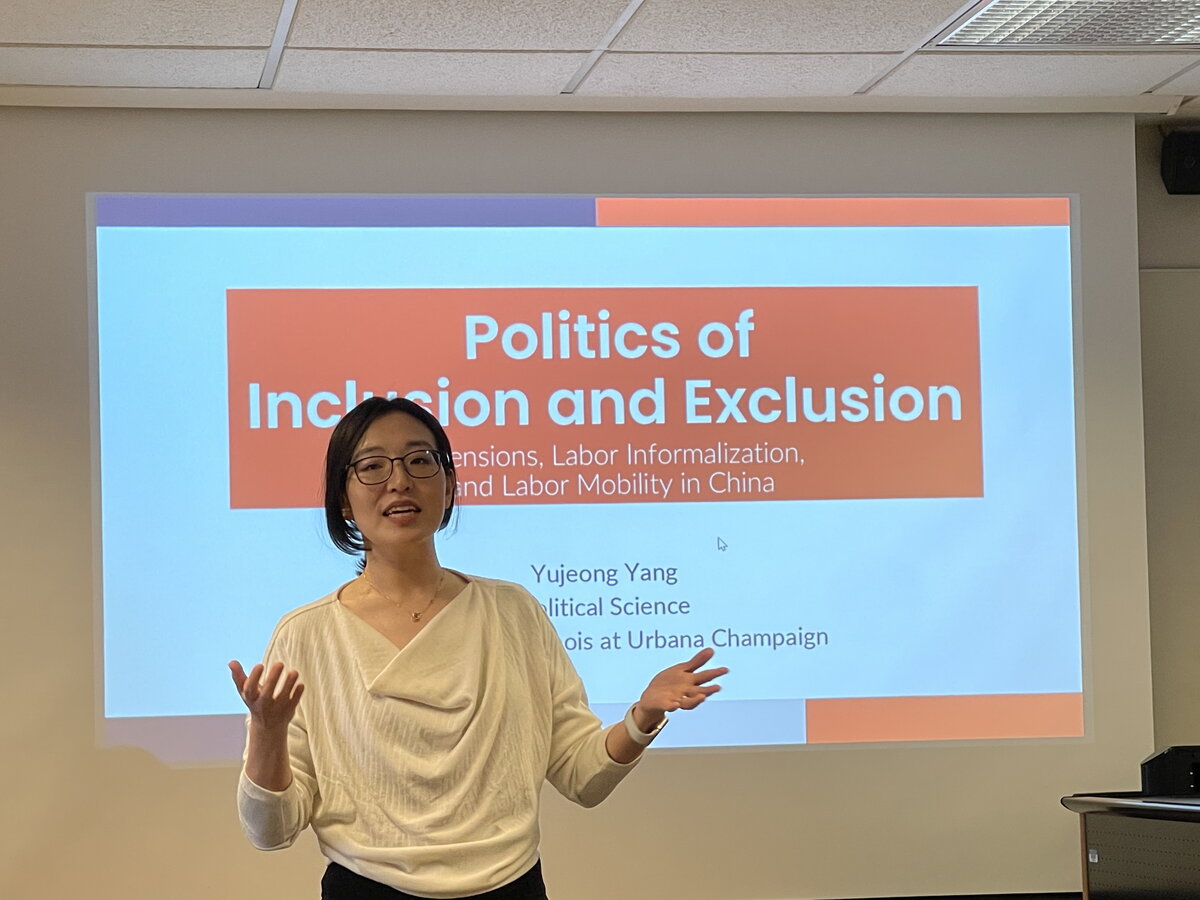
“The Politics of Inclusion and Exclusion: Pensions, Labor Informalization, and Labor Mobility in China”
What inspired you to write this book?
As a graduate student, I was always interested in labor dynamics in China—how workers organize protests under an authoritarian regime, how they understand their rights, and how they try to claim their fair share from employers.
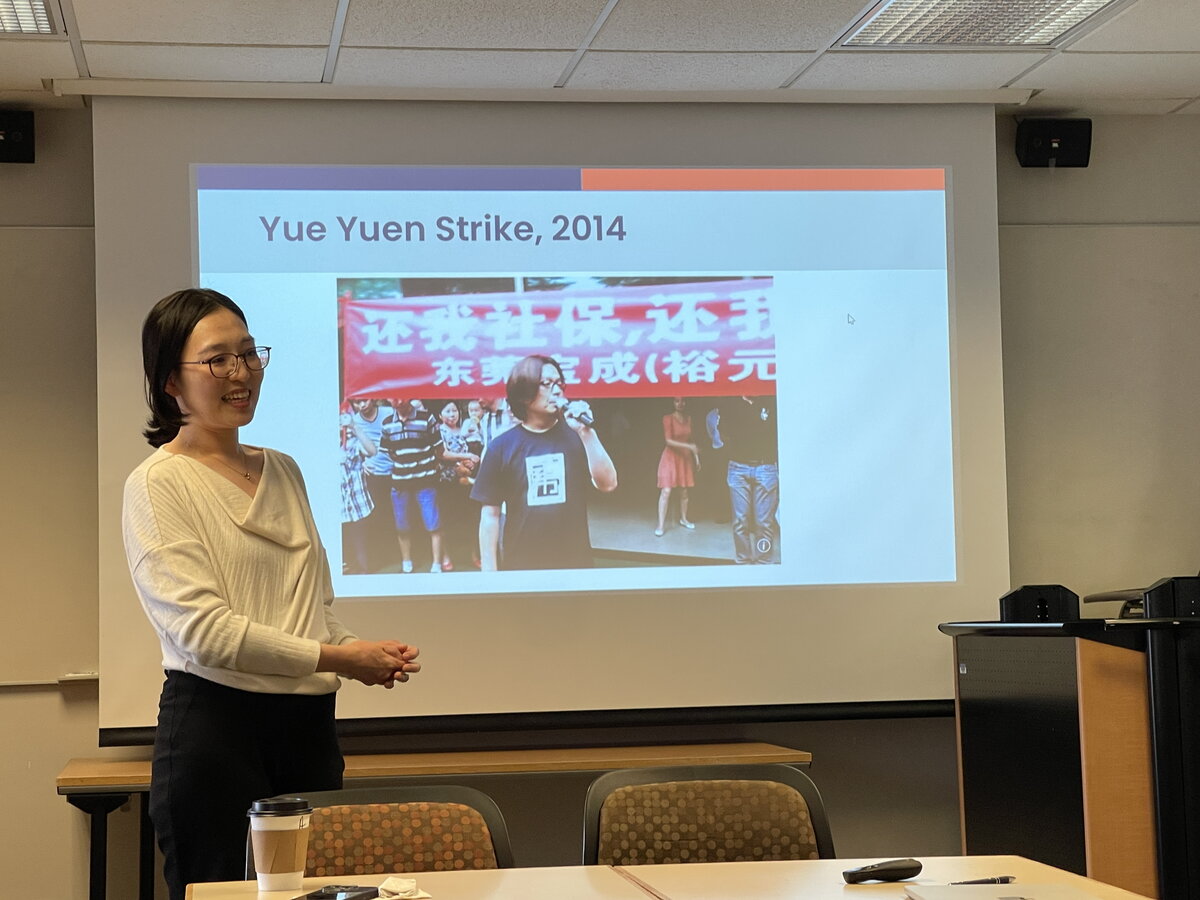
Then in 2014, a large-scale strike took place: the Yue Yuen strike. What struck me was not just its size (which was historically unprecedentedly large), but the nature of the workers’ demands. Unlike many earlier protests, this one centered on the lack of social insurance.
That moment really drew me in. I wanted to understand why some workers are excluded from social insurance systems (in a country governed by a ‘communist’ party), why some local governments are able to leave workers outside the social safety net without risking social stability, and how these uneven protections shape the way the Chinese government responds to broader challenges—like moving beyond the middle-income trap and advancing to the next stage of social development.
Who do you hope reads this book—and what do you hope they take away?
When I first began writing my dissertation, I imagined the main audience would be people who study or are deeply familiar with China. But as I worked on the book, I came to see (and hope) that the patterns I was observing extend well beyond China.
One of my central arguments is that whether local states limit workers’ access to social insurance—especially in the context of increasingly precarious work—depends on whether those informal workers are fully recognized as members of the local community.
With rising immigration, growing job insecurity, and now the added pressures of AI and automation, these dynamics are not unique to China. In that sense, China—and the variation across its regions—offers a kind of microcosm of broader global changes.
I hope readers come away seeing that the challenges faced by workers in China (or policymakers in China) are not distant or exceptional, but instead reflect deeper transformations that many societies are now grappling with.
Do you have any words of advice for students?
It’s hard to offer one-size-fits-all advice—students are at different stages and facing very different challenges. And honestly, I’m not sure students need more advice; they already get plenty of it.
That said, if I had to offer one: prioritize your health—both physical and mental. Everything else comes after that. It’s easy to push your well-being aside in the face of deadlines, expectations, and uncertainty, but in the long run, taking care of yourself is what allows you to do your best work—and keep doing it.
It’s also advice I try (and sometimes fail) to follow myself.